
- Home
- About
- Programs
- Future Students
- Current Students
- How to Apply
Artificial intelligence is rapidly changing the way students learn, communicate and receive feedback. At Eynesbury College, educators are embracing practical ways to use AI to enhance learning while ensuring students continue to develop the critical thinking, communication and academic skills they need for university success.
Recently, Senior English Language Teacher Kari Qasem presented at the Navitas AI Workshop Series, sharing how AI can support personalised feedback, strengthen learning outcomes and improve student engagement. We spoke with Kari about her experience, the opportunities AI presents for educators, and why teachers remain at the heart of the learning experience.
What inspired you to present on AI-augmented feedback and learning support, and why is this topic so relevant for educators today?
Kari: AI technology has been developing at a very rapid pace and is becoming more diverse and accessible. This is affecting all sectors, including education, particularly higher education, and we are still navigating our way through it all. That’s why I decided to join the series of sessions to keep up with the latest trends. For this specific session, I was approached by the organisers to add a teacher’s voice and share an innovative idea for best practice.
AI is changing the way students learn. How do you see it enhancing – not replacing- the role of teachers in providing meaningful feedback and support?
Kari: Since we cannot stop the tide and we cannot prevent students from using AI tools, we should look for ways to promote their ethical and effective use.
Teachers can use AI to save time by generating supplementary materials that provide students with additional authentic practice. They can also use it to create lesson plans and support resources for neurodiverse students.
When it comes to feedback, teachers can use AI to refine and polish the feedback they provide to students. Some programs also use tools such as Turnitin Clarity to guide and monitor student input. This can be particularly valuable when assignments are not scaffolded or broken into smaller stages.
During your presentation, you shared examples of AI-enhanced feedback and learning support. Can you tell us about one or two approaches that have had the biggest impact on your students?
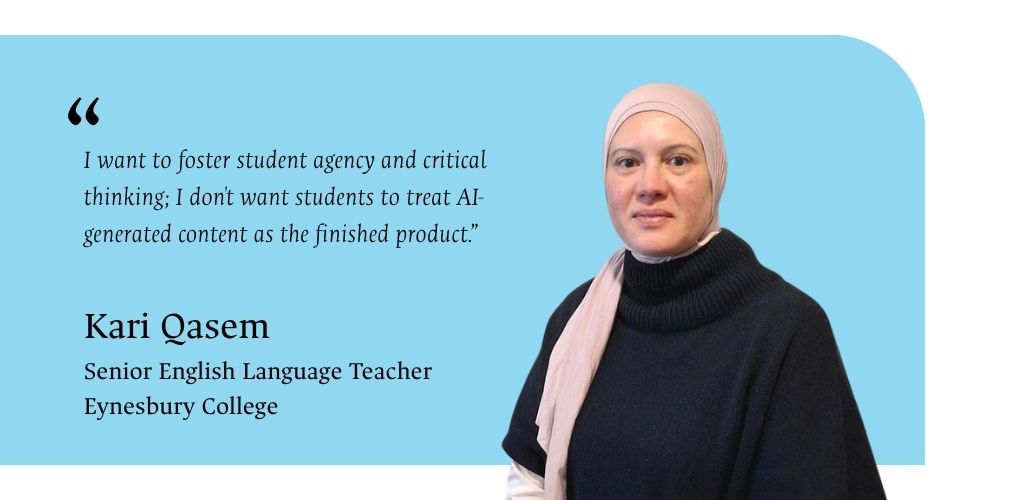
Kari: I promote AI use in the early stages of assignments, particularly during topic analysis and brainstorming, to give all students an equal kick-start. However, I closely monitor their AI use through discussions and interviews. I want to foster student agency and critical thinking; I don’t want students to treat AI-generated content as the finished product.
I also encourage students to use AI as a virtual coach to practise speaking skills and prepare for speaking assessments such as group discussions and presentations. This helps build both their confidence and their understanding of key concepts.
Some educators are still cautious about using AI in the classroom. What advice would you give to teachers who are just starting to explore these tools?
Kari: There are no ultimate answers. This is an evolving area that continues to change, so it’s understandable for educators to feel cautious or uncertain. My advice is to keep learning through self-education, professional development and classroom experimentation. The more we explore these tools thoughtfully, the better we can understand how they can support, not replace, effective teaching.
Looking ahead, how do you see AI shaping the future of English language teaching and student success at Eynesbury College?
Kari: AI is impacting many professions and changing the way we work, but I don’t believe students will stop studying English because human interaction is irreplaceable.
At Eynesbury, our ELICOS teachers will continue to place students at the centre of everything we do. Alongside helping students build their English language proficiency, we will continue to develop their adaptability while providing the academic, social and personal support they need to enjoy a successful learning experience.
Our goal is not only to strengthen students’ language skills but also to equip them with the lifelong learning skills they need to succeed in their pathway programs and beyond.
As AI continues to evolve, Eynesbury College remains committed to embracing innovation in ways that enhance learning while maintaining the personalised support that defines the student experience. By combining emerging technologies with experienced educators like Kari Qasem, we are preparing students with the academic skills, confidence and critical thinking needed to succeed at university and in an increasingly AI-enabled world.